
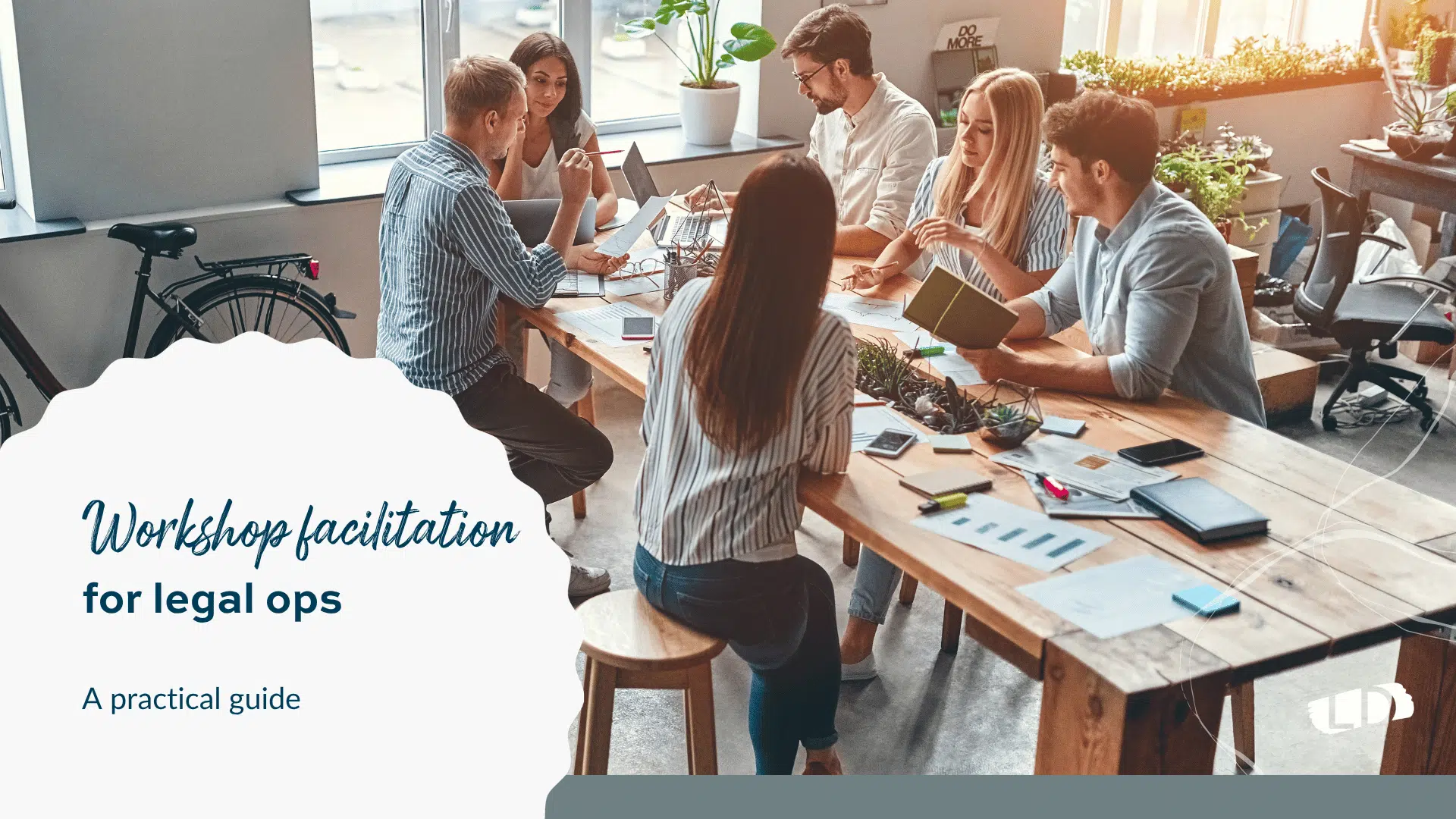
The workshop had started well. People were engaged. The pre-work had been done. Small groups were talking, comparing observations and identifying problems.
Then we reached ideation. This was supposed to be the exciting part: the moment when we would start creating something new. Instead, the energy disappeared. Conversations died. Some cameras went off. People who had been happily participating minutes earlier suddenly seemed reluctant to put anything forward.
Eventually, one participant said it out loud: they weren’t feeling inspired at all, but could try to come up with something if they absolutely had to. You could feel the discomfort in the room. And there I was, facilitating the workshop, wondering what had happened.
Nothing had technically gone wrong. We had an agenda. We had workshop tools. We had prepared. The participants knew each other, and they understood what we were working on. But having the right workshop ideas and tools wasn’t enough. The group had reached an uncomfortable point in the process — being asked to move beyond what they knew, put unfinished ideas into the room and create something that might not work.
What they needed from me at that moment wasn’t another clever exercise. They needed facilitation. Me, putting my skin in the game and staying present in that uncomfortable moment with them.
That’s an important distinction, particularly for people working in legal operations, legal transformation and innovation. Effective workshop facilitation isn’t about having a huge collection of sticky-note exercises, but about creating the conditions that help a group think, contribute, make decisions and move work forward together.
What is facilitation?
Let’s start with the facilitation meaning in its simplest form. Facilitation is the practice of making it easier for a group to work toward a shared goal. The word has its roots in the Latin facilis, meaning “easy.”
That doesn’t mean a facilitator makes the problem easy. The challenge might still be complex, people might disagree, and there may be uncertainty, competing priorities, hierarchy, resistance to change, or simply very different perspectives on what the problem actually is. What the facilitator makes easier is the process of working through that complexity: creating structure for the conversation and the work, helping people participate, asking questions, guiding the group through a process, and keeping the work moving toward an intended outcome.
That’s why facilitation is useful whenever the answer shouldn’t, or couldn’t, come from one person alone.
What is facilitation in the workplace?
In the workplace, facilitation means helping a group accomplish something together rather than simply bringing people together to talk. That’s an important difference.
We’ve probably all experienced the meeting that doesn’t quite work: no clear goal, one person dominating the discussion, others multitasking, the conversation wandering, people repeating the same arguments, the meeting running over, everyone leaving without knowing what was decided.
A facilitated session is intentionally designed around what the group needs to accomplish. You might use facilitation when you need people to understand the current situation, identify or define a problem, understand users, clients or colleagues, generate ideas, evaluate or prioritize options, make a decision together, design a future state, test an idea or prototype, or agree on next steps. In other words, facilitation is useful whenever participation itself is necessary to get to a better outcome.
Why facilitation matters in legal ops?
This is particularly relevant in legal operations. Consider the kinds of challenges legal ops professionals get asked to work on. A contracting process isn’t working. Legal wants to redesign intake. A new CLM system is going in, and nobody’s sure the lawyers will actually use it once it’s live. Leadership needs to agree on priorities — or worse, stakeholders can’t even agree on what the actual problem is yet.
These are rarely problems one expert can solve alone in a back room. The knowledge you need is distributed. Lawyers know part of the story. Legal operations sees another part. Technology, business users, and leadership are each looking at something different again, and none of them are seeing the whole picture on their own.
These aren’t neutral challenges. There are usually people in the organization who have spent years working with the existing processes, contracts, services and systems. Someone created them. Someone chose them. Someone has learned how to make them work. Someone may even have built a successful career inside them. And now you’re inviting those same people into a room and saying: Let’s rethink this.
That’s one reason facilitation matters so much in legal change. You’re not simply trying to extract information from stakeholders or get their “buy-in” after a solution has already been designed. You’re creating a process in which people can participate meaningfully in understanding and shaping what happens next.
Facilitation vs. meeting facilitation: what’s the difference?
Legal teams are usually very familiar with meetings. Facilitation requires a slightly different orientation, and one of the simplest ways I teach this is to separate content from process.
The content is what the group is working on: the problem, information, ideas, decisions, goals and subject matter. The process is how the group works on it — how people participate, which questions are asked, how discussion happens, how ideas are explored, how decisions are made, how the group moves from one stage to the next. The participants work on the content. The facilitator takes care of the process.
A meeting chair might say: here’s how things are. A facilitator is more likely to ask: how are things? A meeting chair might collect opinions and then make a decision; a facilitator gives the group a structured way to explore different perspectives and reach a decision together. A chair often does much of the talking. A facilitator creates conditions in which the group does most of the thinking and talking.
That doesn’t make the facilitator passive. The facilitator has deliberately designed the process that makes that participation possible.
What is an example of facilitation in legal ops?
Imagine that a legal department wants to improve its intake process. One option would be to call a meeting: someone presents the problems with the current process, presents a proposed new workflow, and asks everyone what they think. There might be a useful discussion.
But consider a different approach. A facilitator brings together people who experience the intake process from different perspectives, and instead of beginning with a proposed answer, gives them a structured way to explore the current situation. Where do requests currently come from? Where does information go missing? Where do lawyers experience friction, and where do business users experience it? Where are people creating workarounds? What happens when a request doesn’t fit neatly into the process?
The facilitator doesn’t answer those questions. The group does. And as those different experiences become visible, the team can begin to develop a shared picture of the problem before deciding what a better future process should look like.
That’s facilitation in practice. The facilitator isn’t there to be the smartest person in the room — their job is to help the room do its best thinking.
3 skills every legal ops facilitator needs
There are many facilitation techniques and skills you can develop over time, but if you’re starting to facilitate legal ops workshops, I would begin with three principles.
1. Start with the outcome, not the workshop ideas
When you’re planning a workshop, it’s tempting to start by asking what exercises should we do. Try asking a different question first: what needs to be different when people leave the room?
“We need a workshop about AI.” “We should run an innovation workshop.” “We need to discuss our contracting process.” Those are topics. They’re not outcomes. Do you need the group to develop a shared understanding of the current situation? Define the problem? Prioritize opportunities? Make a decision? Generate ideas? Agree on a future state? Identify next steps?
The clearer you are about the intended outcome, the easier it becomes to make good decisions about the workshop design. Don’t start with the agenda. Start with where you’re taking people.
2. Design for participation, not attendance
Putting ten people into a room doesn’t make a workshop collaborative, and neither does handing everyone sticky notes. Participation has to be designed. People need meaningful ways to contribute their knowledge and perspectives, and that matters particularly in legal environments, where expertise, hierarchy and professional roles can strongly influence who speaks, whose opinion carries weight, and which ideas make it into the conversation.
A good facilitator pays attention not only to what is being discussed, but also to how people are able to take part in the discussion. If you’re bringing people together to solve something collaboratively, their participation isn’t a nice extra — it’s part of the process.
3. Guide the process instead of providing the answer
This can be one of the biggest shifts for legal professionals. We’re trained to know things; clients and colleagues come to us because they expect expertise, analysis and answers.
Facilitation asks us to use our expertise differently. Instead of immediately solving the problem, we might ask a question. Instead of deciding which idea is best, we might give the group a way to evaluate the options. Instead of controlling the conversation, we might create a structure that allows different perspectives to emerge. You’re not abandoning your expertise. You’re learning when to hand it over, and when to hold it back. That’s a facilitation skill in itself.
A facilitation example: when expertise and ownership enter the room
One thing years of facilitating legal professionals has taught me is to pay attention to ownership. If you’re asking people to rethink a process, contract, service or system they’ve helped create, you’re not working with neutral material. You’re asking people to question something they may have invested years of expertise in.
I was reminded of this very concretely in one workshop with the legal team of a big organization. We were working on a complex legal document when I discovered that one of the participants had drafted it herself.
Understandably, it was her baby.
As the group identified opportunities to make the document clearer, she kept saying: “I wouldn’t change a thing.”
The dynamic changed immediately. What I had framed as an opportunity to experiment with a document felt, to her, much more personal. She dominated the conversation, and the energy in that small group just died.
I tried reframing the document as a sandbox: for the purposes of the workshop, it wasn’t anyone’s document. It was simply material we could experiment with.
It helped, although it didn’t completely change the dynamic. She stayed protective, the conversation stayed dominated, and I never fully got that group past it.
This is important for a facilitator. A good facilitator anticipates what you’re asking of the people in the room. When we ask people to redesign something, we’re often asking them to examine decisions they’ve made, expertise they’ve developed or work they’re proud of. What looks like “resistance” from the outside can have something important underneath it. Ownership. Expertise. Professional identity. Fear of losing something that works. Or simply the very human experience of hearing other people critique something you’ve made.
A facilitator needs to get curious about what people have at stake.
It took me a while to get over that one, honestly. You carry the energy of a group with you after a workshop ends. The room doesn’t just close when you shut your laptop. I’m a sensitive person, and sessions like that one stay with me. That doesn’t mean sensitivity is a problem for facilitation. It just means I’ve had to find my own ways of coming back to feeling good afterward, instead of pretending the difficult ones don’t land.
What good legal ops facilitation can make possible
Ownership isn’t only something a facilitator needs to navigate. It can also become one of the greatest sources of energy in the room.
One of my favorite workshop memories comes from a room with 100 lawyers. They represented different generations, different levels of seniority and very different lengths of legal careers. Before the workshop, the General Counsel had warned me that some of the more senior lawyers might be difficult to engage, particularly when we moved into ideation.
I understood the concern. Asking experienced legal professionals to suddenly start generating ideas together can feel like quite a leap from the way they normally work.
But then we got to the brainwriting exercise and something completely different happened.
The senior lawyers were on their feet, leaning over the tables, talking over one another because they had so much they wanted to contribute. Ideas were being written down and passed around, people building on each other’s thinking. The room was alive.
I remember looking at them and thinking how easy it would have been to assume that these were the people who would resist the process.
They didn’t need convincing to care about the future. They needed to be invited into shaping it.
These two workshops looked completely different, but I’ve come to see them as teaching me something similar. People care about work they have invested themselves in.
That investment can show up as protectiveness. It can also show up as enormous energy when people are given a genuine opportunity to shape what happens next. This is why I think we need to be careful with the language of “resistance to change.”
Instead of immediately asking: How do I get these people on board?
It can be much more useful to ask: What have they helped build? What expertise are they bringing? What might they feel they are losing? And where can they genuinely influence what happens next? The goal isn’t to remove people’s ownership but to help move that ownership from the way things have been toward what you’re creating together.
That’s something facilitation has taught me again and again. A well-designed process can create enough structure and space for people to surprise us, and when that happens, facilitation can feel almost like magic.
Of course, it isn’t magic. Someone has designed the conditions that make that participation possible. But every now and then, standing at the edge of a room watching 100 lawyers lean over tables because they want their ideas to be part of what happens next, it certainly feels like it.
Effective facilitation isn’t about having more tools
There are hundreds of facilitation techniques, workshop ideas, templates, canvases and exercises available. They’re useful, and I use them all the time. But a tool doesn’t tell you whether it’s the right tool for the situation. It doesn’t tell you when to use it, what needs to happen before it, or how to introduce it to a skeptical group of lawyers. And it certainly doesn’t tell you what to do when the exercise you’ve carefully planned falls completely flat.
That’s what happened in the workshop I described at the beginning. There wasn’t a magical facilitation tool that suddenly fixed the situation. What helped was lowering the pressure. Peer support helped. Humor helped. The groups began making something without knowing exactly where it would lead, saw what the other groups had created, and received encouraging feedback on their own work. Slowly, the energy changed, and people started moving again.
The experience was a useful reminder that facilitation isn’t the exercise you’re running. It’s what you’re doing to help people move through the process.
Good workshop facilitation is designed
A workshop that feels smooth and natural to participants can look deceptively simple. But effective facilitation usually begins long before anyone enters the room. Someone has thought carefully about why these people need to come together, considered what they need to accomplish, thought about what people might bring into the room, their expertise, expectations, relationships and ownership of the work, decided what kind of participation will help them get there, and created enough structure to move the group forward without trying to control exactly what will happen.
That’s why I think workshop facilitation has so much in common with design. You’re designing the conditions in which people can understand, contribute, decide, create and move forward together. For legal ops professionals, consultants, lawyers and other people responsible for making change happen in legal, that’s an incredibly useful capability, because the more complex the challenge becomes, the less likely it is that the answer is sitting neatly inside one person’s head.
Sometimes our most useful role isn’t to walk into the room with the answer. It’s to know how to help the room find one.
Want a facilitation guide template to get started?
If you have a legal workshop coming up, you don’t need another giant collection of workshop ideas. You need a few good tools, and an understanding of what they’re designed to help you accomplish.
That’s why I created the Legal Ops Facilitation Starter Kit. Inside, you’ll find three simple facilitation tools you can use to help groups talk, think and make decisions together, plus practical guidance for using them in legal workshops.
[Get the free Legal Ops Facilitation Starter Kit →]
And if you want to go deeper into designing and leading workshops — including planning the process, choosing the right tools, managing group dynamics and developing your own facilitation skills — you can explore the Legal Design Facilitator Course.