A better way to make legal operations happen.
A legal process. A contract. A client experience nobody’s happy with. A piece of technology sitting unused because nobody mapped how work actually flows before rolling it out.
“This isn’t working” is the easy part to diagnose. Getting to a solution that actually holds is where most efforts stall. Lawyers Design School gives you a structured, human-centered way through it.
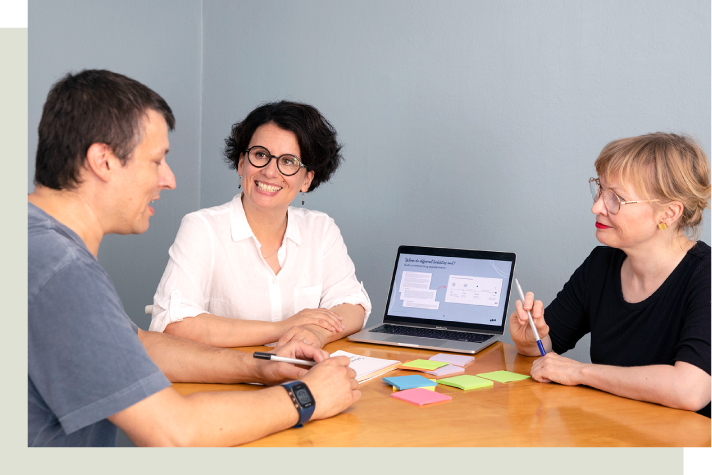
Lead it yourself with our kits and tools. Or bring our experienced facilitator into the room.
Legal Operations Kits – What are you trying to improve?
Start with the challenge in front of you right now. Each Kit gives you a structured process and ready-to-use materials to move from “something needs to change” to a concrete way forward. No workshop built from scratch, no blank slide deck.
Every kit includes facilitation guidance, agendas, exercises, canvases, slides, and participant materials. AI support comes with selected kits.
• Legal Processes Improvement
Make legal work flow better.
Understand how work actually happens today — not how the org chart says it happens — identify where it snags, and redesign around the people using it. Practical legal process improvement, grounded in your team’s reality.

• Contract Design
Make contracts and contracting processes work better for the people who create, negotiate and use them.
This is contract design in practice: find the pain points across the full contracting journey, then test ways to make it clearer and more human-centered.
Get Contracts & Contracting Kit
• Legal Services Innovation
Improve how people experience and interact with Legal.
Understand what internal or external clients need, map their experience and redesign legal services around the moments that matter. Real legal services innovation, not a slogan on a slide.
Get Legal Services & Client Experience Kit
• Legal Tech Adoption
Design for adoption, not for shelf-ware
Want to simplify your contracts, escape the mountain of paperwork but worry your contracts won’t be legally binding?
Understand the people, workflows, and barriers around a new legal technology — including AI tools — and involve users in shaping how it actually fits into the way work gets done. Before you assume the rollout plan will work.
Get Legal Tech Adoption Kit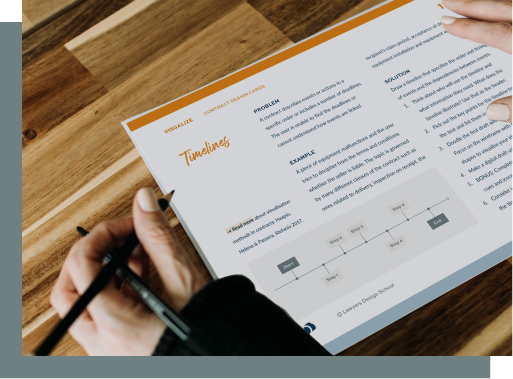
Tools: Stakeholder Mapping Templates & Facilitation Guides
A complete Kit isn’t always the right size. Sometimes you just need the right method for exactly where you’re stuck.
Use individual LDS Tools to support specific steps in the process:
- Stakeholder Mapping Template & User Research — a ready-to-use stakeholder mapping template to understand what people actually need, before you assume you already know
- Customer Personas · turn research into a clearer picture of who you’re designing for
- Customer Journey Mapping · see the experience from beginning to end
- Ideation · generate possibilities beyond the obvious solution
- Prototyping · make ideas tangible enough to explore
- Testing · learn what works before you finalize
Each Tool comes with a facilitation guide template, presentation slides, and a ready-to-use canvas. Everything you need to put the method into practice in your next workshop.
Print the canvas, work it into your digital whiteboard, or run it live in the room. Use one Tool alone, or stack a few together as part of a bigger process.
Get Tools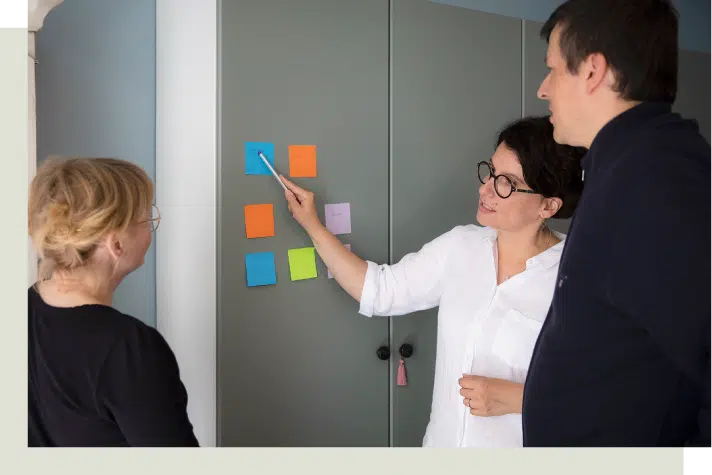
Legal Workshop Facilitation: Bring an expert into the room
You don’t have to facilitate the process yourself.
Lawyers Design School can work with your team to structure the process, provide expert workshop facilitation, and get you from an open challenge to concrete next steps.
We don’t disappear into a back room and return with an answer. We design the process. Your people bring their expertise. Together, we work through the challenge.
Your team participating in the work means the payoff isn’t just the outcome. It’s experience and confidence they carry into the next challenge, without you.
Talk to us about facilitation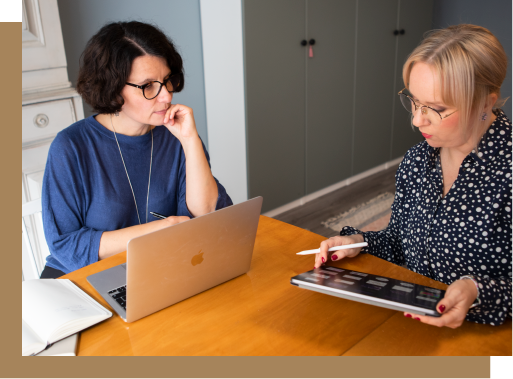
Legal Design in Action: Case Studies from Real Legal Teams
Lawyers Design School has worked with law firms, corporate legal teams, government agencies and legal professionals around the world facilitating teams from Helsinki to Singapore to Chicago onsite and online on challenges spanning legal services, contracts, processes, innovation and technology.
The contexts are different. The way we approach the work is consistent.
An AI Adoption Legal Design Sprint with the innovation team of Am Law 100 firm Polsinelli.
How do you help lawyers adopt AI in ways that actually support their work?
Rather than starting with the technology, the team explored different lawyer personas, their needs and the barriers they faced in using AI tools. They then generated ideas and developed rapid prototypes for AI-enabled services. The challenge wasn’t simply implementing AI. It was designing for adoption.
Finnish Safety and Chemicals Agency — Legal Processes & Communication
How could a government agency make a legal process and its communications work better for the people using them?
Customers and internal stakeholders worked together to identify problems in an existing process and its legal documents, leading to new guidance, prototypes and clearer communication.
City of Helsinki — Legal Services & Client Experience
How could Legal become more proactive and impactful for its internal clients?
In a workshop with 100 City of Helsinki lawyers, participants explored client needs across four design challenges, generated more than 500 ideas and developed prototypes for new ways of working.
European Union Intellectual Property Office — Legal Documents
How can lawyers create legal documents that work better for the people who use them?
In a workshop with 60 EU lawyers, participants explored users and their needs, then developed and presented prototypes for more user-friendly and visual legal documents.
Different challenges. Different contexts.
The same principle: understand before solving, involve the people who matter, make ideas tangible and learn by doing.
Start with the challenge in front of you
Skip the titles. Skip figuring out which method fits. Skip building the process from zero.
Choose a Kit. Pick a Tool. Or bring us into the room.